
What Are Ventilation Fans? The Importance of Choosing the Right Fan in Industrial Facilities
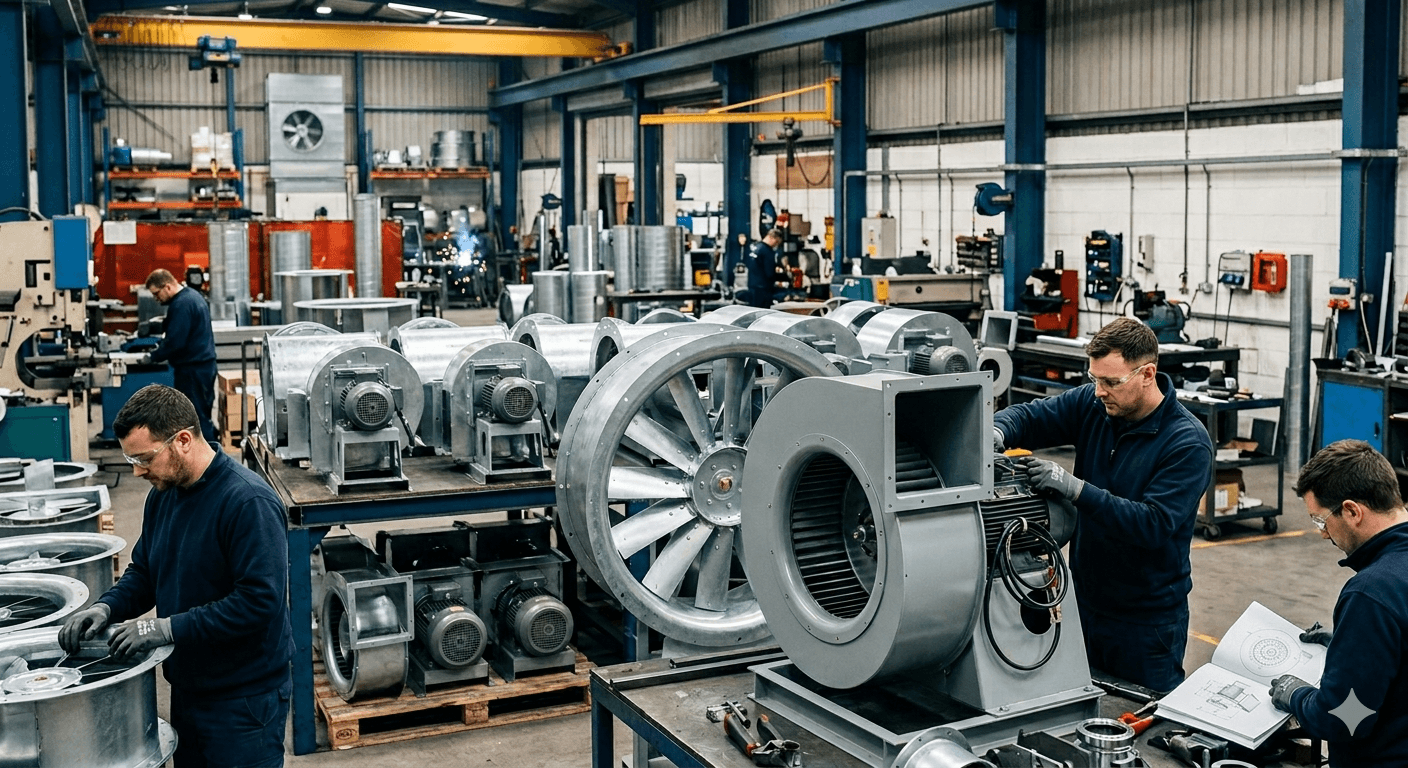
What Is a Ventilation Fan?
Ventilation fans are mechanical devices used to remove contaminated air from enclosed spaces or supply fresh air into the environment. In industrial facilities, they help eliminate unwanted elements such as:
Dust
Smoke
Humidity
Chemical gases
Hot air
A properly designed ventilation fan system improves energy efficiency, enhances workplace comfort, and extends equipment lifespan.
Working Principle of Ventilation Fans
Ventilation fans operate by converting mechanical energy from an electric motor into airflow energy. Through the rotation of the impeller, air is moved in a specific direction, creating pressure differences within the environment.
The main parameters that determine fan performance include:
Airflow rate (m³/h)
Static pressure
Motor power
Rotational speed
Energy consumption
Noise level
In industrial applications, accurate calculation of these values is crucial for system efficiency.
Types of Industrial Ventilation Fans
1. Axial Fans
Axial fans move air parallel to the fan axis and are commonly used in applications requiring high airflow rates.
Application Areas
Factories
Car park ventilation systems
Warehouses
Greenhouses
Cooling systems
Advantages
High airflow capacity
Compact structure
Cost-effective solution
Easy maintenance
2. Centrifugal Fans
Centrifugal fans draw air into the center and discharge it radially. They are preferred in systems requiring high pressure.
Application Areas
Dust collection systems
Filtration systems
Industrial kitchens
Paint booths
Chemical plants
Advantages
High-pressure performance
Resistance to duct system pressure losses
Suitable for heavy industrial applications
3. Roof Fans
Roof-mounted fans are designed to exhaust contaminated air directly outside the building.
Application Areas
Manufacturing facilities
Shopping malls
Workshops
Parking garages
Advantages
Space-saving installation
Effective exhaust performance
Easy system integration
4. Jet Fans
Jet fan systems are mainly used in enclosed parking garages to direct airflow and provide smoke extraction.
Application Areas
Underground parking garages
Tunnels
Large-volume structures
Advantages
Reduces ductwork requirements
Suitable for fire safety scenarios
Lower operational costs
Key Factors to Consider When Selecting a Ventilation Fan
Choosing the right fan requires evaluating the entire system, not only the fan capacity.
Airflow Calculation
The volume of the space and the required air exchange rate must be accurately calculated. Insufficient airflow reduces indoor air quality, while oversized systems lead to unnecessary energy consumption.
Static Pressure Requirements
Duct length, filters, dampers, and bends create system resistance. The selected fan must provide sufficient pressure to overcome these losses.
Energy Efficiency
As energy costs continue to rise, high-efficiency motor technologies and low energy consumption provide major operational advantages.
Recommended Features
IE3 / IE4 motor technology
Variable frequency drive compatibility
Low power consumption
Optimized blade design
Noise Level
Low-noise fans should be preferred, especially in enclosed working environments.
Material Quality
The fan housing and impeller materials must be suitable for the operating environment.
Common Material Options
Galvanized steel
Stainless steel
Electrostatic powder-coated housing
Chemical-resistant special alloys
Industries Using Ventilation Fans
Ventilation fans play a critical role across many industries.
Main Application Sectors
Food production facilities
Textile factories
Automotive industry
Chemical plants
Shopping malls and commercial buildings
Hospitals
Warehouses
Power plants
Industrial kitchens
Each sector requires different airflow capacities, pressure levels, and durability standards. Therefore, project-specific engineering solutions are essential.
Benefits of a Proper Ventilation System for Businesses
Professionally designed ventilation systems provide:
Improved employee health and safety
Increased production efficiency
Energy savings
Compliance with occupational safety standards
Extended equipment lifespan
Reduced fire and gas risks
In the long term, these systems lower operational costs and accelerate return on investment.