
What Are Ventilation Systems? The Key to Healthy Living Spaces with Clean Air
What Are Ventilation Systems?
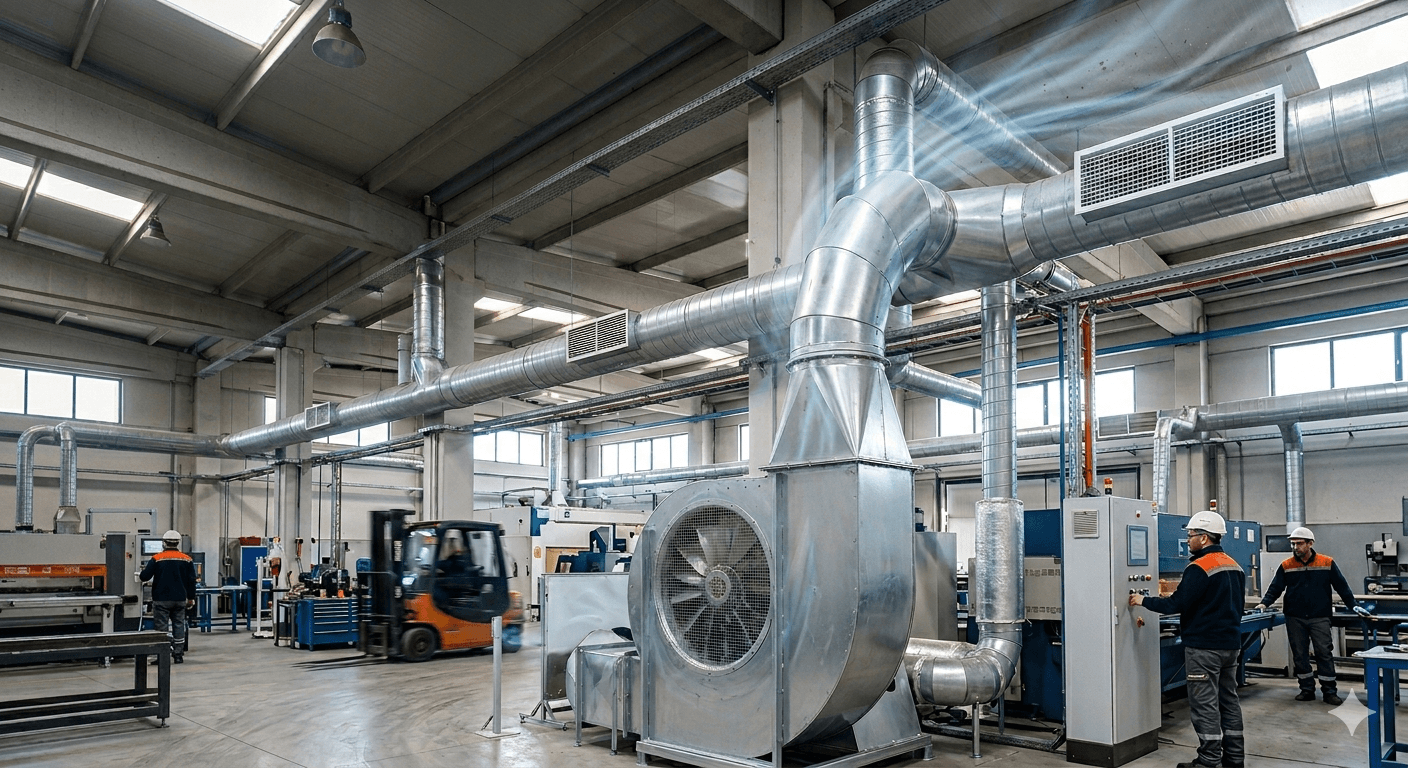
Ventilation systems are engineering solutions that ensure the controlled removal of polluted, humid, or harmful gas-laden air from indoor spaces and replace it with fresh air. Widely used today in both industrial facilities and residential and commercial buildings, these systems are one of the fundamental elements in creating healthy and comfortable living environments.
Over time, enclosed spaces can accumulate carbon dioxide, volatile organic compounds (VOCs), dust particles, and other pollutants, all of which can negatively affect human health. Ventilation systems play a crucial role at this point by improving indoor air quality, increasing employee productivity, and enhancing overall quality of life.
Ventilation systems are generally divided into two main categories: natural ventilation and mechanical ventilation. Natural ventilation relies on elements such as windows, vents, and building design to enable airflow, while mechanical ventilation systems provide controlled air circulation with the help of fans, ducts, and filtration equipment. Mechanical systems are especially preferred in large-scale projects and in environments where hygiene is critical.
In addition, modern ventilation systems can be equipped with heat recovery technologies to improve energy efficiency. In this way, the energy from the exhaust air is recovered, reducing environmental impact and lowering operating costs.
In conclusion, ventilation systems not only provide clean air but also perform many important functions such as humidity control, temperature balance, and the removal of harmful substances. Therefore, a properly designed and professionally implemented ventilation system is an indispensable component of modern buildings.